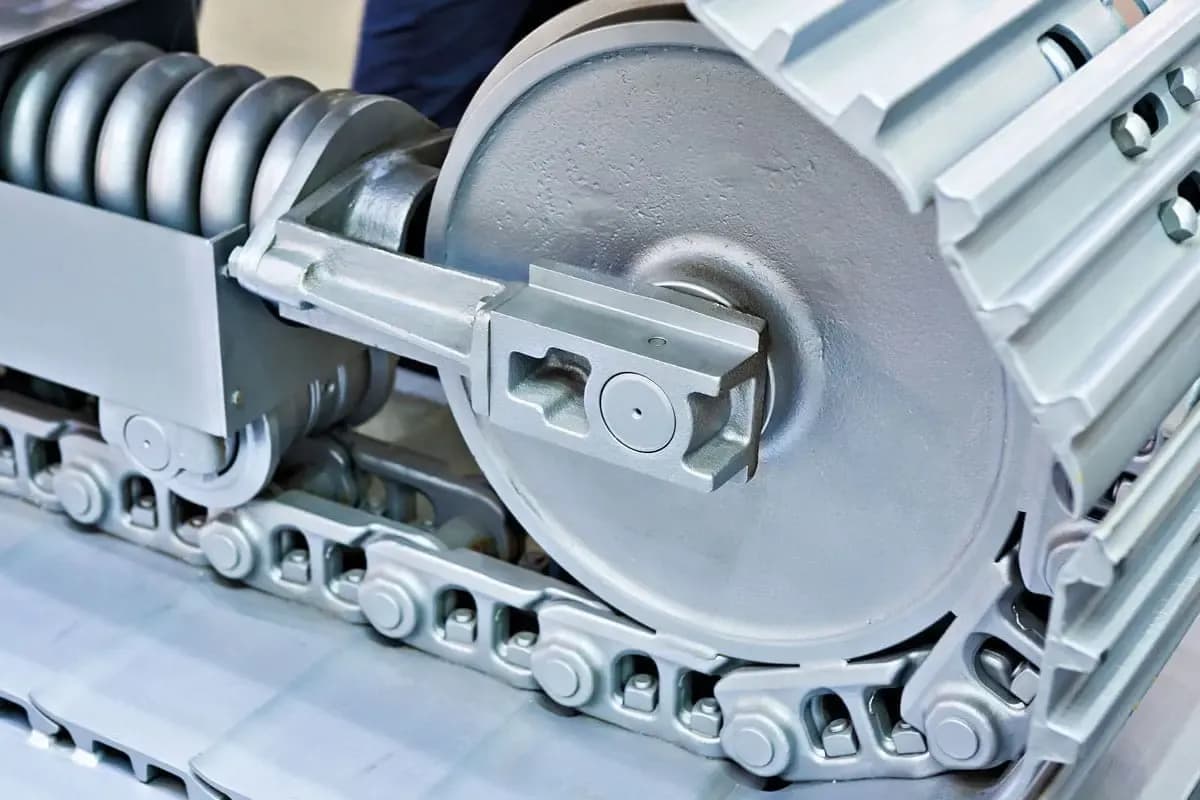
Track Adjuster: Principles of Operation and Importance of the Pallet Tension Regulator
The Track Adjuster (also known as a track tension adjuster) is a crucial component in tracked heavy machinery, responsible for maintaining the proper tension of the track chain. This article provides detailed information about the operating principle, functions, and signs of wear and tear for the Track Adjuster.

What is a track adjuster?
The Track Adjuster (also known as a track tension adjuster) is a mechanical or hydraulic component found in the undercarriage system of excavators, bulldozers, and other heavy machinery with tracks. Its function is to regulate the proper tension of the track chain. This system typically works in conjunction with idlers and recoil springs to ensure smooth and consistent track movement.
Properly adjusted pallet tension reduces wear on the lower component parts, improves fuel efficiency, and extends the service life of the equipment.
How does a track adjuster work?
The track adjuster mechanism regulates the tension of the chain using a spring or hydraulic system. When a pallet is unloaded, the system advances the idlers, which re-tension the chain.
This mechanism:
It prevents the palette from slipping out of place
It ensures the proper functioning of the chain
It extends the lifespan of the lower components
Working in challenging conditions enhances resilience.
Why is proper pallet tension important?
Excessive empty palette:
The palette came loose
Increased wear and tear on sprockets and idler pulleys
Power outage
It can cause an increase in vibrations.
An overly dense color palette, however:
Premature wear of rollers;
Increased fuel consumption;
Reduced lifespan of the pallet chain
It causes additional stress on the engine and drive system.
- Precise Adjustment of Pallet Tension
- Preventing Pallet Displacement
- Protection of Lower Component Parts
- Reliable Operation in Harsh Working Conditions
- High durability and long service life
Key Advantages of the Track Adjuster
The track adjuster plays a crucial role in the safe and efficient operation of tracked heavy equipment. A properly functioning tensioning system extends the lifespan of the lower components and reduces operating costs.